By HolistiCare Team
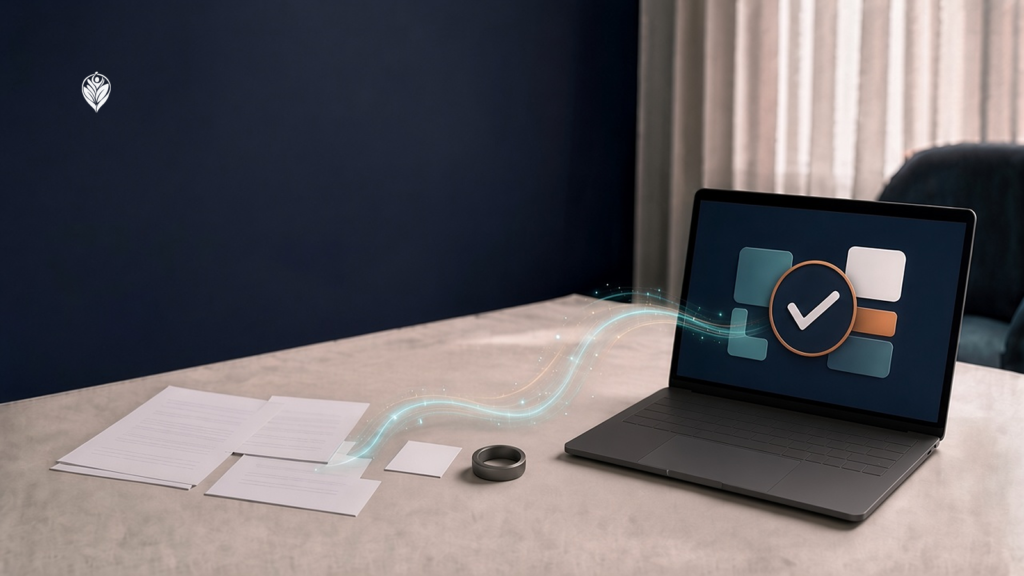
Longevity clinic workflow software should connect a client’s supported information, the clinic’s own methodology and a doctor-approved care plan with the client’s daily actions and the next clinical review, while working alongside the clinic’s existing EHR. HolistiCare is clinical decision support built for that workflow.
The short answer
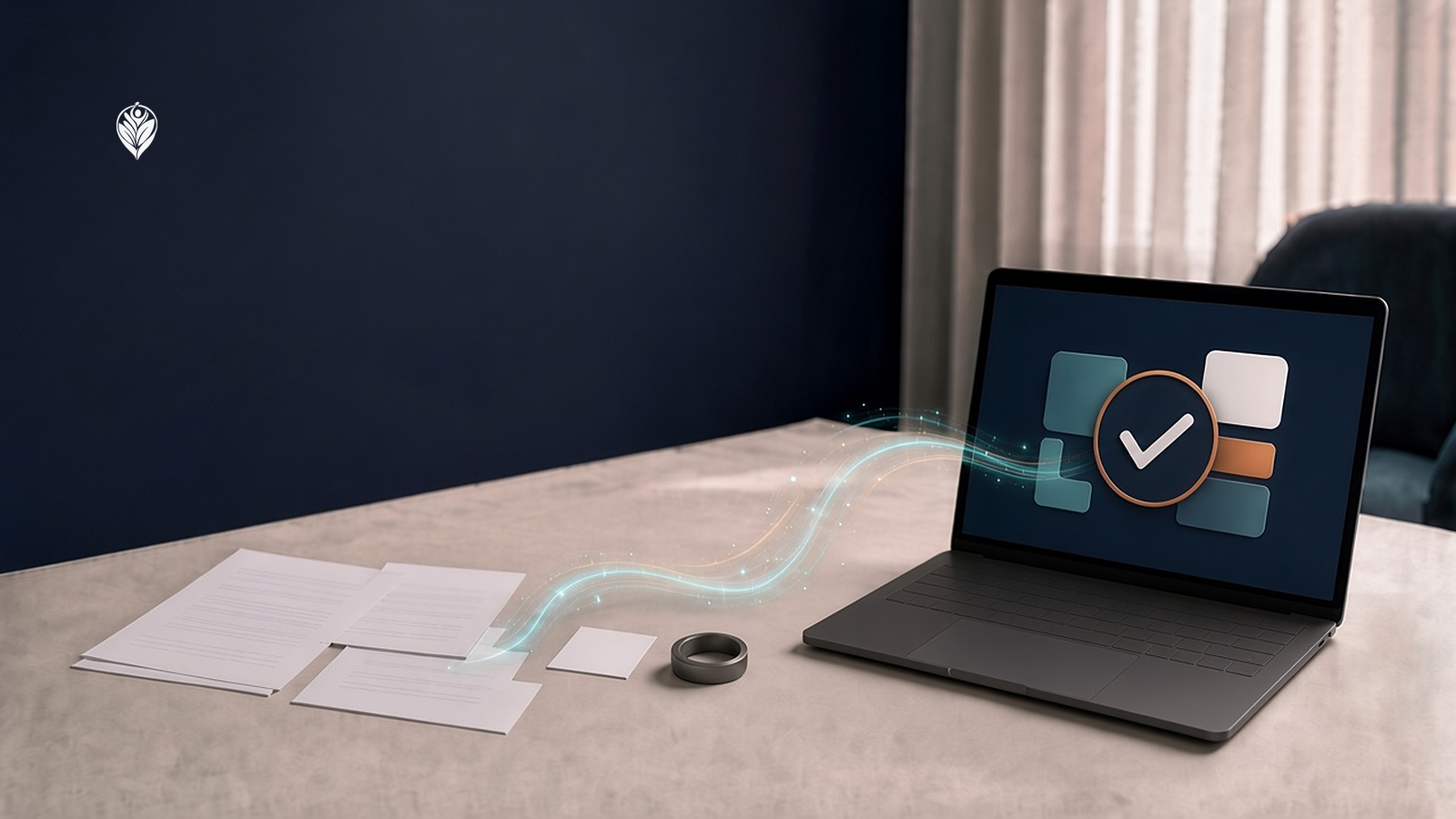
Longevity clinic workflow software should carry one client journey through five connected steps: supported information comes together in one client view, the clinic’s methodology shapes a draft plan, the doctor reviews, amends and explicitly approves that plan, the client follows the approved plan between visits, and the next review starts from the last one.
Key takeaways
- The software should put your methodology into each draft plan.
- AI organizes, analyzes and proposes; the doctor reviews, amends and explicitly approves each care plan.
- It works alongside your EHR, not instead of it.
- The approved plan should continue between visits as tasks, reminders and check-ins.
- The next review should start from the last one.
What is longevity clinic workflow software?
Longevity clinic workflow software organizes the clinical workflow of a longevity program from assessment to reassessment, around a doctor who makes the care-plan decisions. For a clinic that combines biomarker-led assessment, personalized plans, repeated measurements and between-visit follow-up, that workflow is the program itself.
HolistiCare is a clinical decision-support platform for clinics delivering personalized, data-informed care. It brings clinical information, AI-assisted assessment, care planning and follow-up into a connected workflow. That is the job longevity clinic software should do when it is built around how a clinic works, and it is the idea behind a longevity platform built for clinicians.
Where it sits next to your EHR
HolistiCare works alongside the clinic’s existing EHR. It is neither an EHR nor an EMR, and it does not replace the clinical record. Its role is to connect relevant inputs with an ongoing care program: assessment, a reviewed plan, client actions, monitoring and the next clinical review.
Connecting the two starts simply. The clinic shares its EHR name, and the technical team carries out a system-specific assessment and asks for further details if needed. What can be connected depends on that assessment, so it is worth reviewing the supported data routes and integrations with your own systems in mind.
What AI does and what the doctor does
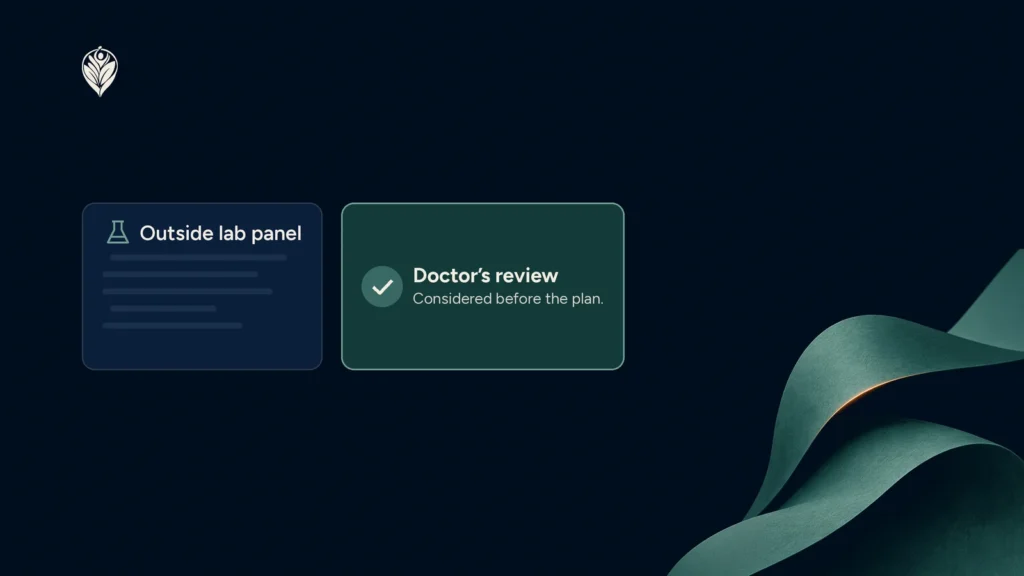
AI organizes and analyzes information and proposes next steps. Care-plan decisions stay with the doctor. The doctor reviews the proposed plan, makes any appropriate changes and explicitly approves it before the client receives it. HolistiCare does not issue new care plans on its own.
What does a longevity program need beyond the clinical record?
The work between record entries: bringing information together, turning it into a plan, carrying it into daily life and bringing it back for review.
- Connected clinical context. Lab reports, genetic and microbiome information, wearable data, questionnaire responses and prior records can arrive separately. Supported inputs should come together in a connected client view.
- A route from findings to a plan. A collection of results does not explain what a particular client should do next. The clinic needs a draft plan, aligned with its methodology and ready for doctor review.
- A methodology that carries through. A clinic’s approach has to carry through responsibilities, clinical review and follow-up, while each doctor keeps their own clinical judgment.
- A bridge between visits. Clients need understandable actions and a route back to the team between one consultation and the next.
- Progress the team can discuss. Historical measurements and care-plan changes belong together when the team reviews a program. Reporting supports that evaluation; deciding what a change means clinically stays with the professionals.
None of this replaces the record. It is the work the record sits beside.
How should workflow software carry your methodology into each plan?
The clinic configures its own clinical approach, the AI drafts within it, and the doctor edits and approves the result.
Your methodology, or a default to start from
A clinic can configure its own clinical methodology so suggestions reflect the way its doctors practice. A default longevity methodology is also available. The methodology is part of what makes a clinic worth choosing, so the software needs to make room for it. That is also why it is worth keeping your clinical methodology portable.
An editable draft across the areas of care
A draft plan can combine nutrition, supplementation, physical activity, sleep and lifestyle with the client’s goals and clinical priorities. Recommendations can carry rationale, suggested monitoring and evidence links. The doctor can edit the proposed interventions and set SMART goals. This is how personalized holistic plans take shape: as a proposal the doctor works on, not a finished document.
Explicit approval and a version history
The approval moment is the center of the workflow. Every new or changed plan requires the doctor’s review, amendment as appropriate and explicit approval before it reaches the client. Version history records how the plan evolves, and each change stays subject to the same review and approval.
What should happen to client information before the doctor reviews it?
Supported information should arrive in one client view, in a consistent form, with its source one step away.
- Supported inputs. Laboratory files, historical records, questionnaires, genetic and microbiome imports, wearable data, CSV and Apple Health. Available connections depend on the source platform, access, permissions and implementation requirements.
- A consistent form. Normalization includes unit conversion where appropriate and reference-range context. Lab values are normalized to the doctor’s own configured settings.
- The source, one step away. Provenance links information to its source, and clinicians can open the underlying report and source values.
- The longer view. Longitudinal records and trends let clinicians look beyond an isolated result.
- The clinician’s own reading. Editable summaries and recorded overrides keep the clinician’s view alongside the suggested analysis.
Together, these are what clinical data analysis should mean in a longevity program: information organized for the doctor’s review.
How does an approved plan reach the client between visits?
Between visits, the client should receive an understandable plan with daily actions, reminders and check-ins, and a route back to the team.
The client sees the doctor-approved plan, laboratory results and daily actions in the HolistiCare client app on iOS and Android, the patient portal or the web app. SMART action plans turn clinical goals into specific tasks, with frequency, success criteria, short instructions and rationale. Delivery through the app, SMS or email follows the client’s preferences.
Reminders reinforce the doctor-approved plan and physician-set instructions. Clients can record completion, report barriers and request adjustments, and any resulting care-plan change needs doctor approval. Check-ins between visits run at configured intervals through the app, SMS or email, and client and team messaging keeps the conversation inside the care workflow.
Patient AI Chat lets clients discuss their own health information, earlier laboratory results and their care plan. It retrieves and explains the doctor-approved plan. It does not create a new plan or bypass the doctor’s approval.
How should the next review build on the last one?
The doctor should open the next review with new results, client updates, completed tasks, reported barriers and the earlier plan version in one place.
The clinic brings new results, client updates, task completion and plan history into the next review. The doctor decides whether to keep or change care, and any new or changed plan needs explicit approval before delivery. Patient progress and longitudinal reports support that review. Understanding why follow-up breaks down between visits is part of designing this return path well.
A report of change is material for professional judgment. Its clinical meaning remains the doctor’s decision.
Who in the clinic should the software work for, and what should you ask to see?
Each role should be able to see its own part of one client journey, so the evaluation should follow one real workflow end to end. Good software for longevity clinic owners serves the whole team, not one desk.
- Clinic owner. Keep a distinctive methodology and clinical voice. Look for your own approach in an editable draft, the doctor’s approval and the client’s daily actions.
- Medical director. Clinical consistency, appropriate review and traceable decisions. Follow source information into a suggestion, a doctor’s amendment, explicit approval and the review history.
- Operations lead. Clear ownership, connected handoffs and client follow-up between intake, the approved plan and the next review.
- Digital or technical lead. Start with the systems your clinic actually uses, beginning with the EHR name, then assess connection scope and implementation.
- Doctors and the care team. Relevant information, editable recommendations, defined responsibilities and useful client updates.
- The client. An understandable approved plan, their results and the next action between appointments.
The practical tests are simple to state. Can the doctor inspect the source, amend the suggestion and make the decision? Can the client see what was approved and understand the next action? Can the team see what happened and bring it back for review? The questions to ask in a clinical OS demo put those tests into practice.
When you reach the offer itself, compare HolistiCare plans by the capacity, team workflows and branding your clinic needs, not by base subscription alone.
Frequently asked questions
Is longevity clinic workflow software the same as an EHR?
No. HolistiCare works alongside the clinic’s existing EHR. It is neither an EHR nor an EMR and does not replace the clinical record; it connects relevant inputs with the ongoing care program.
Does the AI make care-plan decisions?
No. In HolistiCare, AI organizes and analyzes information and proposes next steps. Care-plan decisions stay with the doctor, who reviews the proposed plan, makes any appropriate changes and explicitly approves it before the client receives it.
Can we use our own clinical methodology?
Yes. In HolistiCare, a clinic can configure its own clinical methodology so suggestions reflect the way its doctors practice. A default longevity methodology is also available.
What client information can HolistiCare bring together?
HolistiCare can bring supported information into one client view, including laboratory files, historical records, questionnaires, genetic and microbiome imports, wearable data, CSV and Apple Health. Available connections depend on the source platform, access, permissions and implementation requirements.
What does the client see between visits?
Between visits, the client sees the doctor-approved plan, laboratory results and daily actions in the HolistiCare client app on iOS and Android, the patient portal or the web app, with SMART tasks and reminders. Patient AI Chat retrieves and explains the approved plan; it does not create a new one.
We already have an EHR. How do we start with HolistiCare?
Share your EHR name. HolistiCare’s technical team assesses it and asks for further details if needed, so the next step is a system-specific assessment. HolistiCare works alongside your existing EHR, not instead of it.
Follow one of your care journeys through HolistiCare
Bring one representative workflow and the questions that matter to your clinical and operations teams. Share your EHR name so the technical team can assess the relevant connection, and keep patient information out of the inquiry. Choose an available time and enter your contact details to book your demo.