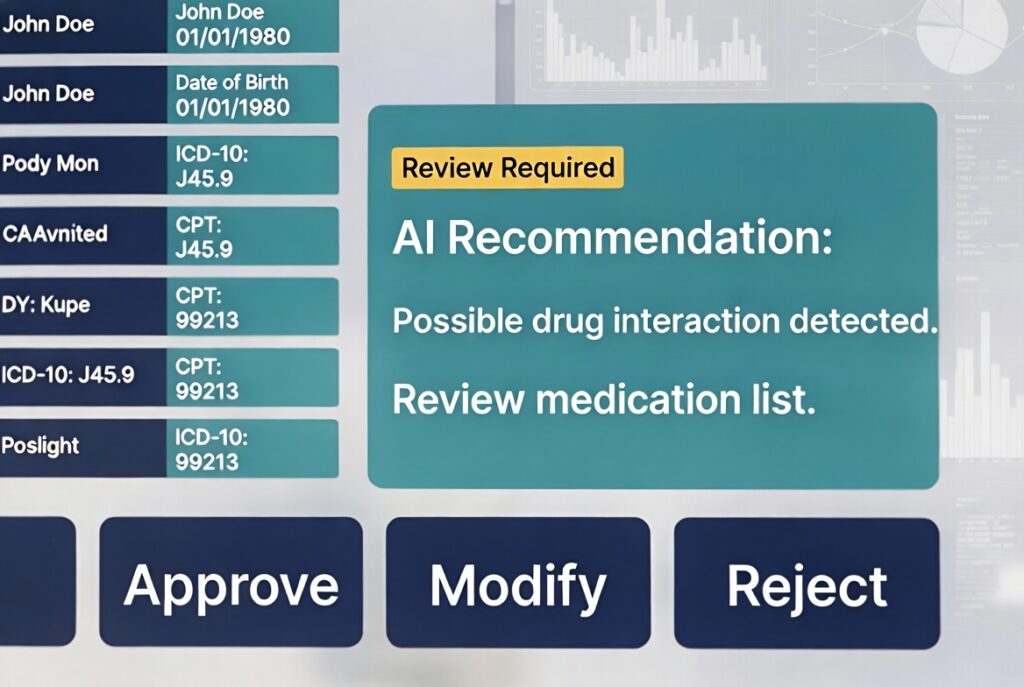

AI-assisted decision-making in healthcare offers unprecedented potential to transform medical diagnosis and treatment. Of 14,219 identified records in a comprehensive analysis, 18 review articles covering findings from 669 other studies highlight the growing impact of this technology.
You’ve likely heard bold claims about artificial intelligence in medicine, but what’s the reality behind the hype? The role of artificial intelligence in healthcare extends far beyond basic automation. AI can help healthcare professionals diagnose diseases, plan treatments, predict outcomes, and manage population health. This technology has already demonstrated remarkable capabilities in multiple medical imaging applications — detecting breast cancer mitosis, classifying skin cancer with dermatologist-level accuracy, diagnosing diabetic retinopathy, and even predicting cardiovascular risk factors from retinal photographs.
Furthermore, AI advantages in healthcare include potentially increasing institutional efficiency and addressing critical challenges like professional shortages and growing demand from aging populations. For patients with decision-making limitations, such as elderly or psychiatric patients, AI tools offer another benefit: they can screen for biases against traditionally marginalized groups and identify the best interventions to restore decision-making capacity.
Despite these promising applications, ethical concerns of AI in healthcare require careful consideration. As artificial intelligence decision support systems become more integrated into clinical workflows, questions about transparency, accountability, and patient autonomy demand thoughtful answers. Throughout this article, you’ll discover how AI is reshaping healthcare decision-making across various domains while examining both its transformative potential and legitimate limitations.
AI in Clinical Decision-Making: Use Cases and Tools
“All the applications in our portfolio will ultimately have an AI model. It’s inevitable. Predictive models can help inform physicians and reduce their cognitive burden, which is transformative for wellness and quality of care. There are also a lot of opportunities for real savings in the revenue cycle when AI models are applied in the right place. All boats will rise with AI.” — Gary Fritz, Vice President and Chief of Applications, Stanford Health Care
Remote Monitoring with Wearable AI Devices
Wearable health technology has created new opportunities for personalized health monitoring through continuous tracking of physical states and biochemical signals. These devices collect massive amounts of data that AI algorithms analyze to provide insights into individual health status, enabling early detection of potential issues [1]. Additionally, AI improves wearable device accuracy by identifying and correcting errors in collected data while managing cross-sensitivity issues where one signal might influence others [1].
During the COVID-19 pandemic, AI-powered wearables proved especially valuable by tracking symptoms and predicting outbreak patterns, demonstrating their potential for real-time epidemiological monitoring [2]. Modern wearable devices track vital health metrics including respiration rate, electrocardiogram readings, skin temperature, and increasingly, blood glucose levels [3].
AI-Based Diagnosis in Radiology and Pathology
The field of radiology has emerged as a prime area for AI implementation due to its reliance on image analysis and pattern recognition. In lung cancer cases, CNN-based architectures can predict cancer progression utilizing combined PET/CT imaging with c-indices exceeding 0.70 [4]. Similarly, AI systems can classify bone tumors from preoperative radiographs with accuracy comparable to subspecialty radiologists and better than junior radiologists [4].
In pathology, AI algorithms analyze tissue samples microscopically, identifying subtle histopathological attributes often invisible to the human eye [4]. The integration of these two fields through AI represents a transformative advancement in diagnostic medicine, particularly in oncology where radiological imaging provides anatomical insights while pathology offers cellular-level information [5].
Predictive Models for Disease Progression
AI predictive models help forecast disease trajectories and patient outcomes with remarkable accuracy. In Alzheimer’s research, integrated frameworks utilizing ensemble transfer learning and generative modeling can predict progression from cognitively normal to Alzheimer’s disease with accuracy and F1-scores of 0.85 and 0.86 respectively, up to 10 years in advance [6].
These systems continuously learn and adapt from new data, enabling them to evolve and improve over time [6]. Consequently, healthcare providers can identify patterns, predict health outcomes, and make more informed decisions about patient care. For instance, by examining activity levels, sleep patterns, and heart rate, AI algorithms can forecast the likelihood of cardiac events, allowing for proactive interventions [1].
Artificial Intelligence Decision Support System in ICUs
Intensive care units generate vast amounts of patient data that AI systems can analyze to support critical decision-making. However, according to a systematic review of 1,263 studies, only 25 (2%) of AI systems have progressed to actual clinical integration, highlighting a significant gap between development and implementation [7].
Despite this challenge, AI-powered early warning systems have demonstrated ability to detect subtle physiological changes preceding clinical deterioration [8]. In one survey, 66% of physicians agreed that an AI-based clinical decision support system to assist in weaning patients from continuous renal replacement therapy would aid their daily clinical practice [9].
For ICU physicians, model transparency remains crucial, with 74.9% stating that AI systems should provide certainty percentages with predictions, and 95.3% emphasizing the importance of understanding the criteria behind model predictions [9]. Although most physicians remain confident AI won’t replace their jobs, 86% believe in its added value for intensive care settings [10].
Organizational Decision-Making Enhanced by AI
Beyond clinical applications, AI transforms organizational operations in healthcare settings. Currently, an increasing number of healthcare organizations employ AI to gain operational efficiencies, putting this technology on a path to revolutionize healthcare management [11].
Forecasting Hospital Resource Utilization
AI-powered analytics provide accurate revenue forecasts, aiding budget planning and resource allocation [12]. A study analyzing 352,843 pediatric emergency department admissions developed AI systems that forecast overcrowding with R² scores up to 75%, outperforming traditional prediction methods [13]. These systems enable hospitals to anticipate needs before they arise, optimizing resource distribution without increasing staff numbers.
Machine learning algorithms identify patterns in patient data that human analysts might miss, analyzing seasonal illness patterns, demographic shifts, and weather events impacting hospital utilization. Mount Sinai Health System cut emergency room wait times in half by predicting admission volumes through AI [14]. Moreover, these models continuously improve as they process new data, with MLOps architectures enabling automatic updates to enhance prediction accuracy [13].
AI for Cost-Effective Scheduling and Staffing
Traditional scheduling often fails to consider individual preferences, leading to dissatisfaction, burnout, and high turnover among healthcare workers. Research indicates that participative scheduling approaches incorporating staff preferences significantly improve job satisfaction [15]. AI-powered scheduling systems address this challenge by analyzing historical data, seasonal trends, and patient flow to predict staffing needs [1].
AI scheduling tools reduce no-shows, optimize resource use, and match providers with patients based on factors beyond simple availability. One implementation reported a 29-day reduction in time-to-hire and saved over two hours per transaction in scheduling and credentialing [2]. Cedars-Sinai Medical Center cut staffing inefficiencies by 15% after implementing an AI workforce planning system [14].
In nurse scheduling specifically, mixed-integer programming (MIP) effectively handles fair shift allocation, while constraint programming (CP) manages complex rule-based conditions [15]. These tools evaluate factors including recent hours worked, department intensity, and case complexity to create fair, sustainable schedules [1].
AI in Quality Indicator Prediction
A pilot study published in the New England Journal of Medicine AI found that large language models can accurately process hospital quality measures, achieving 90% agreement with manual reporting [3]. For the complex CMS SEP-1 measure for sepsis, which traditionally requires a meticulous 63-step evaluation, AI systems dramatically reduce processing time by scanning patient charts and generating contextual insights in seconds [3].
These advancements offer significant operational benefits: correcting errors, speeding up processing time, lowering administrative costs, enabling near real-time quality assessments, and scaling across various healthcare settings [3]. Nevertheless, hospitals vary in their evaluation practices—while 61% evaluate their predictive models for accuracy, only 44% conduct similar evaluations for bias [16].
First, accurate measurement of quality indicators remains crucial for patient safety. Second, hospitals with more financial resources and technical expertise implement AI solutions more effectively than under-resourced facilities, potentially creating a “digital divide” in healthcare operations [17].
AI in Shared Decision-Making and Patient Engagement
The patient-centered dimension of healthcare is experiencing a digital shift through AI technologies. About one in six adults now use AI chatbots monthly for health information, with this number rising to approximately 25% among adults under 30 [18].
Personalized Treatment Recommendations via NLP
Natural Language Processing (NLP) powers AI systems that analyze medical records and provide personalized treatment recommendations. These tools extract valuable insights from unstructured clinical notes and medical literature, supporting more informed decision-making [19]. Generative AI converts complex medical reasoning into accessible narratives tailored to individual literacy levels while preserving clinical accuracy [4].
AI-enabled decision aids have shown promising results in clinical settings. For instance, the Atrial Fibrillation Shared Decision-Making aid recommends the most suitable thromboprophylaxis for individual patients, presenting information on bleeding risks that patients found helpful for treatment adherence [20].
In actual practice, AI-enabled decision aids create interactive dialog that adapts to individual concerns. When patients express hesitation about surgical options, the system can restructure treatment comparisons to emphasize nonsurgical alternatives [4].
AI Chatbots for Patient Education
Healthcare chatbots have become significant tools for patient engagement. These programs simulate human conversations to address various healthcare needs, offering benefits in two main areas: delivery of remote health services and administrative assistance [5].
Chatbots provide patients with 24/7 access to health information when providers are unavailable [21]. The anonymity of exchanging messages with a computer rather than a human increases people’s comfort with disclosing sensitive information they might otherwise keep to themselves [21].
Users generally find chatbots easy to use and perceive them as a nonjudgmental way to communicate sensitive information [21]. Personalization and empathetic responses act as facilitators to chatbot use and efficacy [21]. Indeed, some people reported that the feeling chatbots cared was central to their appeal, even knowing the bots cannot actually empathize [18].
Medication Adherence Monitoring with AI Tools
AI has demonstrated notable benefits for medication adherence. Clinical trials show AI-based tools improved medication adherence by 6.7% to 32.7% compared to control interventions [22].
“Vik,” a chatbot designed for breast cancer patients, provides personalized text messages with quality-checked medical information. Studies showed increased engagement with Vik correlated with better observance when using treatment reminders, improving average compliance by more than 20% [6].
Similarly, an AI smartphone app for stroke patients taking anticoagulant therapy achieved 100% adherence in the intervention group compared to 50% in the control group [6]. The absolute improvement was 67%, with 83.3% of patients rating the platform as “extremely good” for medication management [6].
Other successful applications include SMS-based refill reminders using conversational AI, which demonstrated significantly higher medication refill rates compared to control groups [6].
Ethical and Legal Concerns in AI-Assisted Decision-Making
Ethical considerations emerge as vital counterbalances to the rapid advancement of ai-assisted decision-making in healthcare. These concerns require careful examination as AI systems become more deeply embedded in clinical practice.
Bias in Training Data and Algorithmic Fairness
Biases arise and compound throughout the AI lifecycle, potentially leading to substandard clinical decisions and worsening longstanding healthcare disparities [23]. Many datasets overrepresent non-Hispanic Caucasian patients, causing worse performance for underrepresented groups [23]. One striking example showed an algorithm used across several U.S. health systems prioritizing healthier white patients over sicker black patients for additional care management [24]. This occurred because the system trained on cost data rather than actual care needs.
Transparency and Explainability in AI Outputs
The “black box” nature of many AI systems creates difficulties in understanding how decisions are reached [25]. Currently, clinicians need explanations behind AI outputs to interpret and act effectively for optimal patient care [26]. First, semantic transparency proves fundamental—if the same input or output symbol represents different items within an algorithm, users cannot truly know what is being processed [27]. The American Medical Association has adopted policies requiring explainable clinical AI tools that include safety and efficacy data [26].
Accountability in AI-Driven Clinical Decisions
Accountability becomes increasingly complex when artificial intelligence systems participate in clinical decisions. Among healthcare professionals surveyed, 70% believed clinicians should bear primary responsibility for patient outcomes, yet 57.5% felt accountability should be partly shared with AI developers or institutions [7]. This challenge grows because neither clinicians nor engineers maintain robust control over AI decisions or fully understand how systems reach conclusions [9].
Ethical Concerns of AI in Healthcare Autonomy
Patient autonomy faces challenges as AI systems process their data. Informed consent becomes crucial when AI tools analyze patient information [10]. The principle of autonomy dictates that individuals have the right to know about treatment processes, risks, and importantly, who bears responsibility when robotic medical devices fail [8]. Meanwhile, ethical frameworks for AI implementation typically emphasize beneficence (ensuring patient benefit) and nonmaleficence (avoiding harm) [28].
Implementation Challenges and Research Gaps
“We need to design and build AI that helps healthcare professionals be better at what they do. The aim should be enabling humans to become better learners and decision-makers.” — Mihaela van der Schaar, PhD, Director, Cambridge Center for AI in Medicine, University of Cambridge
Integration with Existing Clinical Workflows
At present, only 2% of AI systems have progressed to actual clinical integration [29]. Successful implementation requires co-designing with clinicians from day one to ensure tools reflect real-world workflows [30]. Unfortunately, many AI researchers fail to appreciate the complexity of clinical radiology workflows, leading to systems that disrupt rather than enhance productivity [31]. AI must integrate seamlessly without adding unnecessary “clicks” or confusion for healthcare providers [31].
Lack of Real-World Validation Studies
In effect, more randomized controlled trials are needed to establish evidence of benefits for AI versus traditional care delivery models [32]. Notably, many algorithms perform well in controlled conditions yet fail to generalize in broader clinical applications [33]. Real-world validation remains costly but necessary for credibility in healthcare settings [34].
Interoperability with EHR Systems
Healthcare in the U.S. remains highly fragmented, with each hospital using customized EHR systems creating data that is often difficult to exchange [35]. Subsequently, integration issues have been a greater barrier to widespread adoption than accuracy of AI suggestions [34]. FHIR aims to bridge these gaps by providing a common language for data exchange [35].
Training Requirements for Healthcare Professionals
Secondly, insufficient knowledge about AI usage represents a primary obstacle to adoption [36]. Healthcare professionals often lack technical skills needed to effectively utilize AI tools [37]. Educational programs must be restructured to prepare students for ongoing digitalization [38].
Conclusion
AI-assisted decision-making stands at the frontier of healthcare transformation, offering tools that extend beyond basic automation. Throughout this exploration, you’ve seen how AI enhances clinical decisions across radiology, pathology, disease prediction, and intensive care settings. These technologies demonstrate impressive capabilities while still requiring human oversight.
Beyond direct patient care, AI reshapes organizational efficiency through improved resource forecasting, staff scheduling, and quality measurement. Healthcare institutions that embrace these tools gain competitive advantages while facing implementation hurdles that require thoughtful navigation.
The patient experience also evolves with AI integration. Personalized treatment recommendations, educational chatbots, and medication adherence tools create new pathways for engagement. Patients increasingly turn to these digital solutions for information and support between clinical visits.
Ethical considerations nonetheless demand attention as these systems become more embedded in healthcare. Bias in training data, lack of transparency, and unclear accountability create legitimate concerns that must balance against potential benefits. The healthcare community must address these challenges proactively rather than reactively.
Looking ahead, widespread adoption depends on solving several practical challenges. AI systems need seamless integration into clinical workflows, robust validation through real-world studies, better interoperability with existing systems, and comprehensive training programs for healthcare professionals.
The future of healthcare will likely feature AI as a standard component rather than a novel addition. This shift promises more personalized, efficient, and accessible care when implemented thoughtfully. Your understanding of both the potential and limitations of these technologies will prove valuable as AI continues its integration into healthcare decision-making at all levels.
Key Takeaways
AI in healthcare is rapidly evolving from experimental technology to practical clinical tools, but successful implementation requires addressing both technical capabilities and human-centered concerns.
• AI demonstrates proven clinical value in radiology, pathology, and ICU monitoring, with some systems achieving diagnostic accuracy comparable to specialists
• Only 2% of developed AI healthcare systems reach actual clinical integration, highlighting a massive gap between research and real-world implementation
• Ethical challenges including algorithmic bias, transparency issues, and unclear accountability must be proactively addressed before widespread adoption
• Healthcare organizations gain operational efficiency through AI-powered resource forecasting, scheduling optimization, and quality measurement automation
• Patient engagement improves through AI chatbots and personalized treatment recommendations, with medication adherence increasing by 6.7% to 32.7%
• Successful AI integration requires seamless workflow integration, comprehensive staff training, and robust real-world validation studies beyond controlled environments
The transformation of healthcare through AI depends not just on technological advancement, but on thoughtful implementation that prioritizes patient safety, clinical workflow integration, and ethical considerations.
FAQs
Q1. How does AI enhance decision-making in healthcare? AI enhances healthcare decision-making by analyzing vast amounts of data to provide accurate diagnoses, predict disease progression, and offer personalized treatment recommendations. It also improves operational efficiency in hospitals through resource forecasting and staff scheduling optimization.
Q2. What are the main applications of AI in clinical settings? AI is widely used in radiology for image analysis, in pathology for tissue sample examination, in ICUs for early warning systems, and in remote patient monitoring through wearable devices. It also assists in predicting disease outcomes and creating personalized treatment plans.
Q3. How does AI impact patient engagement and education? AI-powered chatbots provide 24/7 access to health information, offer personalized education, and assist with medication adherence. These tools can adapt to individual literacy levels and concerns, making healthcare information more accessible and engaging for patients.
Q4. What ethical concerns arise from AI use in healthcare decision-making? Key ethical concerns include potential biases in AI algorithms, lack of transparency in decision-making processes, unclear accountability for AI-driven decisions, and challenges to patient autonomy. Ensuring fairness, explainability, and proper informed consent are crucial ethical considerations.
Q5. What are the main challenges in implementing AI in healthcare systems? Major challenges include integrating AI tools with existing clinical workflows, lack of real-world validation studies, interoperability issues with electronic health record systems, and insufficient training for healthcare professionals in AI usage. Overcoming these hurdles is essential for widespread AI adoption in healthcare.
References
[1] – https://www.thinkitive.com/blog/using-ai-to-solve-clinic-staffing-scheduling-nightmares/
[2] – https://www.shiftmed.com/press-releases/shiftmed-launches-ai-powered-workforce-suite/
[3] – https://health.ucsd.edu/news/press-releases/2024-10-21-study-ai-could-transform-how-hospitals-produce-quality-reports/
[4] – https://pmc.ncbi.nlm.nih.gov/articles/PMC12331219/
[5] – https://www.jmir.org/2024/1/e56930/
[6] – https://pmc.ncbi.nlm.nih.gov/articles/PMC8521858/
[7] – https://bmcmedethics.biomedcentral.com/articles/10.1186/s12910-025-01243-z
[8] – https://pmc.ncbi.nlm.nih.gov/articles/PMC8826344/
[9] – https://pmc.ncbi.nlm.nih.gov/articles/PMC7133468/
[10] – https://pmc.ncbi.nlm.nih.gov/articles/PMC11977975/
[11] – https://www.ache.org/blog/2022/how-ai-can-transform-healthcare-management
[12] – https://www.aha.org/aha-center-health-innovation-market-scan/2024-06-04-3-ways-ai-can-improve-revenue-cycle-management
[13] – https://pmc.ncbi.nlm.nih.gov/articles/PMC11927529/
[14] – https://www.tribe.ai/applied-ai/ai-and-hospital-resource-management
[15] – https://pmc.ncbi.nlm.nih.gov/articles/PMC12157959/
[16] – https://www.sph.umn.edu/news/new-study-analyzes-hospitals-use-of-ai-assisted-predictive-tools-for-accuracy-and-biases/
[17] – https://www.healthaffairs.org/doi/10.1377/hlthaff.2024.00842
[18] – https://www.nytimes.com/2025/11/16/well/ai-chatbot-doctors-health-care-advice.html
[19] – https://www.mdpi.com/2076-3417/14/23/10899
[20] – https://www.nature.com/articles/s41746-024-01326-y
[21] – https://www.ncbi.nlm.nih.gov/books/NBK602381/
[22] – https://www.frontiersin.org/journals/digital-health/articles/10.3389/fdgth.2025.1523070/full
[23] – https://pmc.ncbi.nlm.nih.gov/articles/PMC11542778/
[24] – https://learn.hms.harvard.edu/insights/all-insights/confronting-mirror-reflecting-our-biases-through-ai-health-care
[25] – https://www.healthcareitnews.com/news/yale-study-shows-how-ai-bias-worsens-healthcare-disparities
[26] – https://www.ama-assn.org/press-center/ama-press-releases/ama-adopts-new-policy-aimed-ensuring-transparency-ai-tools
[27] – https://pmc.ncbi.nlm.nih.gov/articles/PMC9527344/
[28] – https://www.cdc.gov/pcd/issues/2024/24_0245.htm
[29] – https://hai.stanford.edu/news/stanford-develops-real-world-benchmarks-for-healthcare-ai-agents
[30] – https://www.aha.org/ai-powered-health-care-optimizing-clinical-workflows-and-elevating-patient-experience
[31] – https://pmc.ncbi.nlm.nih.gov/articles/PMC8669074/
[32] – https://pmc.ncbi.nlm.nih.gov/articles/PMC11848050/
[33] – https://www.frontiersin.org/journals/digital-health/articles/10.3389/fdgth.2025.1575753/full
[34] – https://www.foreseemed.com/artificial-intelligence-in-healthcare
[35] – https://news.feinberg.northwestern.edu/2024/08/07/novel-ai-model-may-enhance-health-data-interoperability/
[36] – https://pmc.ncbi.nlm.nih.gov/articles/PMC12402815/
[37] – https://www.thelancet.com/journals/lanpub/article/PIIS2468-2667(25)00036-2/fulltext
[38] – https://bmchealthservres.biomedcentral.com/articles/10.1186/s12913-022-08215-8