
For functional and integrative medicine clinics running biomarker-led, protocol-driven programs.
Your EHR holds the record. HolistiCare coordinates the program around it.
Functional medicine programs depend on work that rarely sits in the EHR alone. Results arrive from multiple sources. Clinical interpretation has to connect those inputs. Protocol logic needs to reflect the clinic's methodology. Approved actions then have to move into follow-up.
HolistiCare brings those steps into a clinician-governed operating layer without replacing the system of record.
- Bring supported data together in a longitudinal member view.
- Apply your clinic's methodology through editable protocol workflows.
- Keep clinicians in control with review, editing and explicit approval before member delivery.
- Carry approved plans into follow-up through structured tasks, check-ins, re-testing and longitudinal review.
Built for complex, protocol-driven care
HolistiCare is designed for functional and integrative medicine clinics where the operating model extends beyond documentation.
It is especially relevant when:
- advanced laboratory testing or other multimodal diagnostics contribute to clinical decisions;
- several clinicians or care-team roles contribute to the member journey;
- protocol consistency matters, but clinical judgement must remain with the practitioner;
- proprietary protocols and clinical language need to remain under clinic control;
- the clinic wants member-facing plans and communications under its own brand; and
- the EHR is essential, while important parts of the program still sit across portals, documents or separate engagement tools.
One governed workflow from complex data to longitudinal care
- Bring together supported inputs. Organise relevant clinical and program data in one longitudinal member view.
- Structure the information for review. Surface priority patterns and the data or rules behind material suggestions.
- Apply the clinic's methodology. Configure editable protocol workflows around the clinic's own clinical language and operating model.
- Review, edit and approve. A qualified practitioner remains responsible for the final clinical decision. Nothing moves to the member before explicit approval.
- Turn approved plans into action. Deliver structured member tasks and program content under the clinic's brand.
- Maintain longitudinal follow-up. Return check-in responses, available device signals, re-testing data and recorded trends to the care team's workflow.
Bring supported data into one longitudinal clinical view
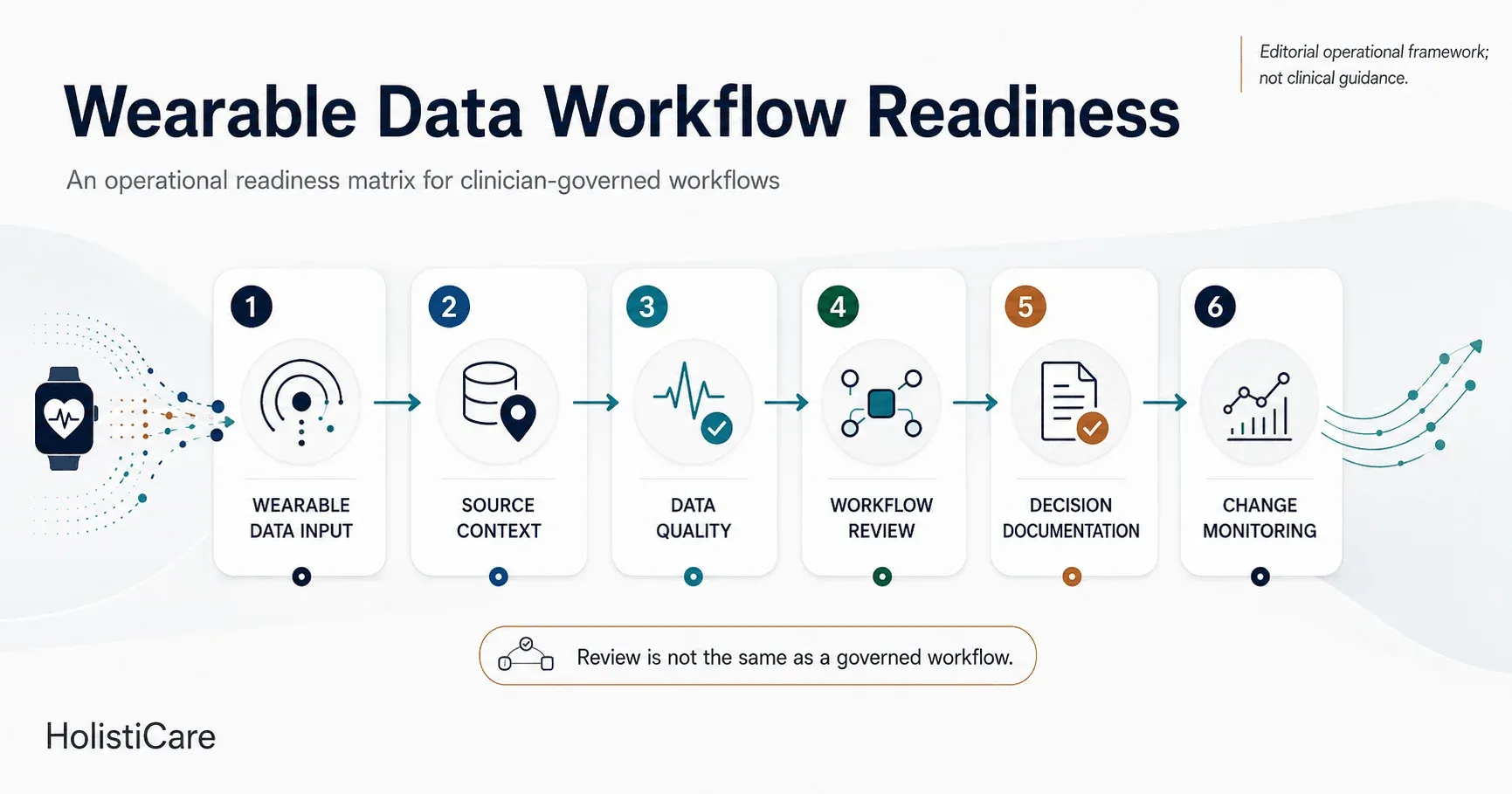
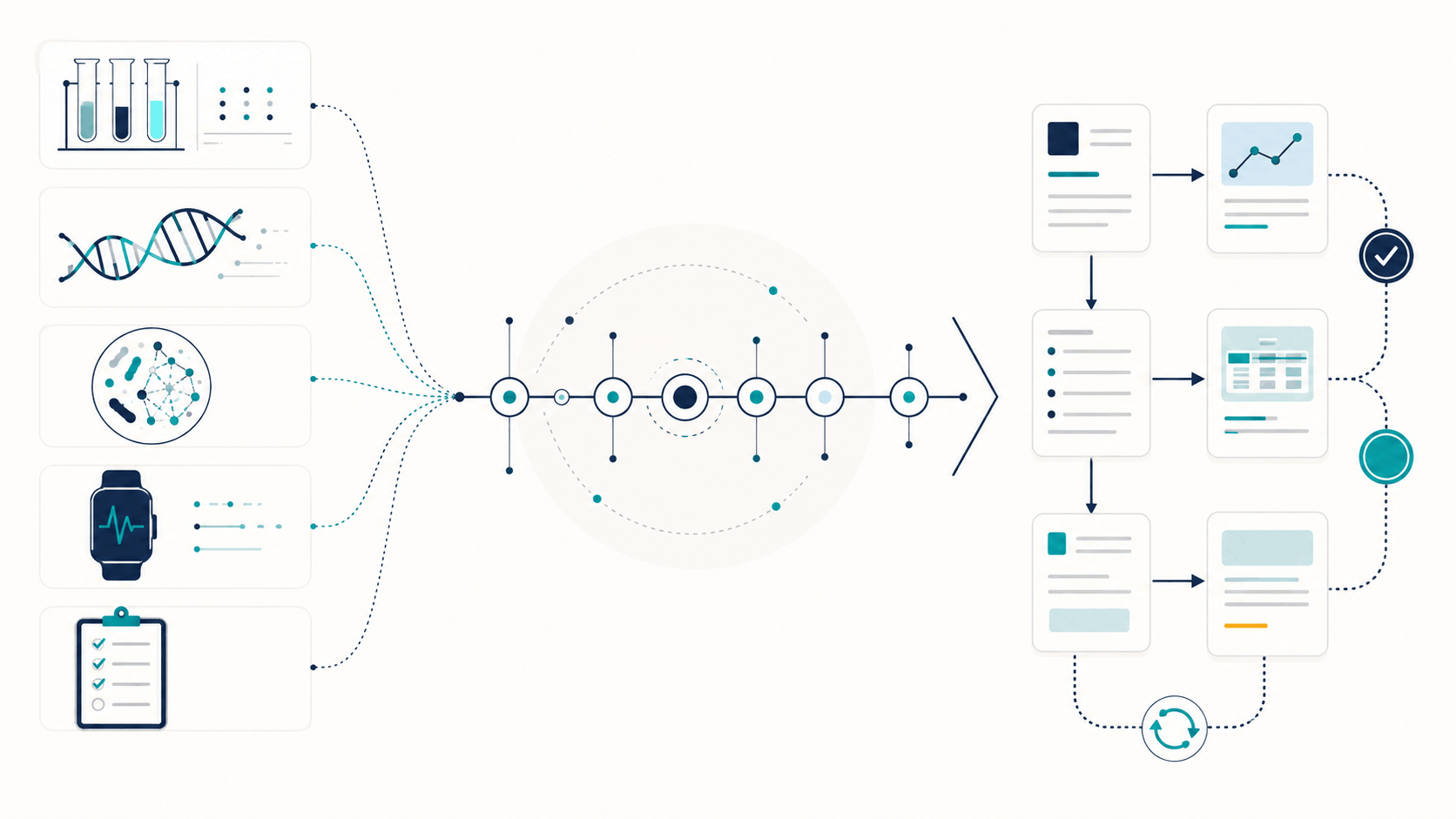
HolistiCare can bring laboratory results, genetic and microbiome information, structured assessments, clinical history, clinician notes and relevant documents into a longitudinal member view. Supported wearable data can be incorporated through technically validated connections where suitable API access and permissions are available. Other third-party connections are assessed against the available API, documentation, data rights, mapping and testing requirements.
The purpose is practical: give the care team a structured clinical view for interpretation and follow-up instead of rebuilding the picture from disconnected sources each time. See how HolistiCare approaches clinical data aggregation and analysis.
Encode your methodology without giving up clinical control
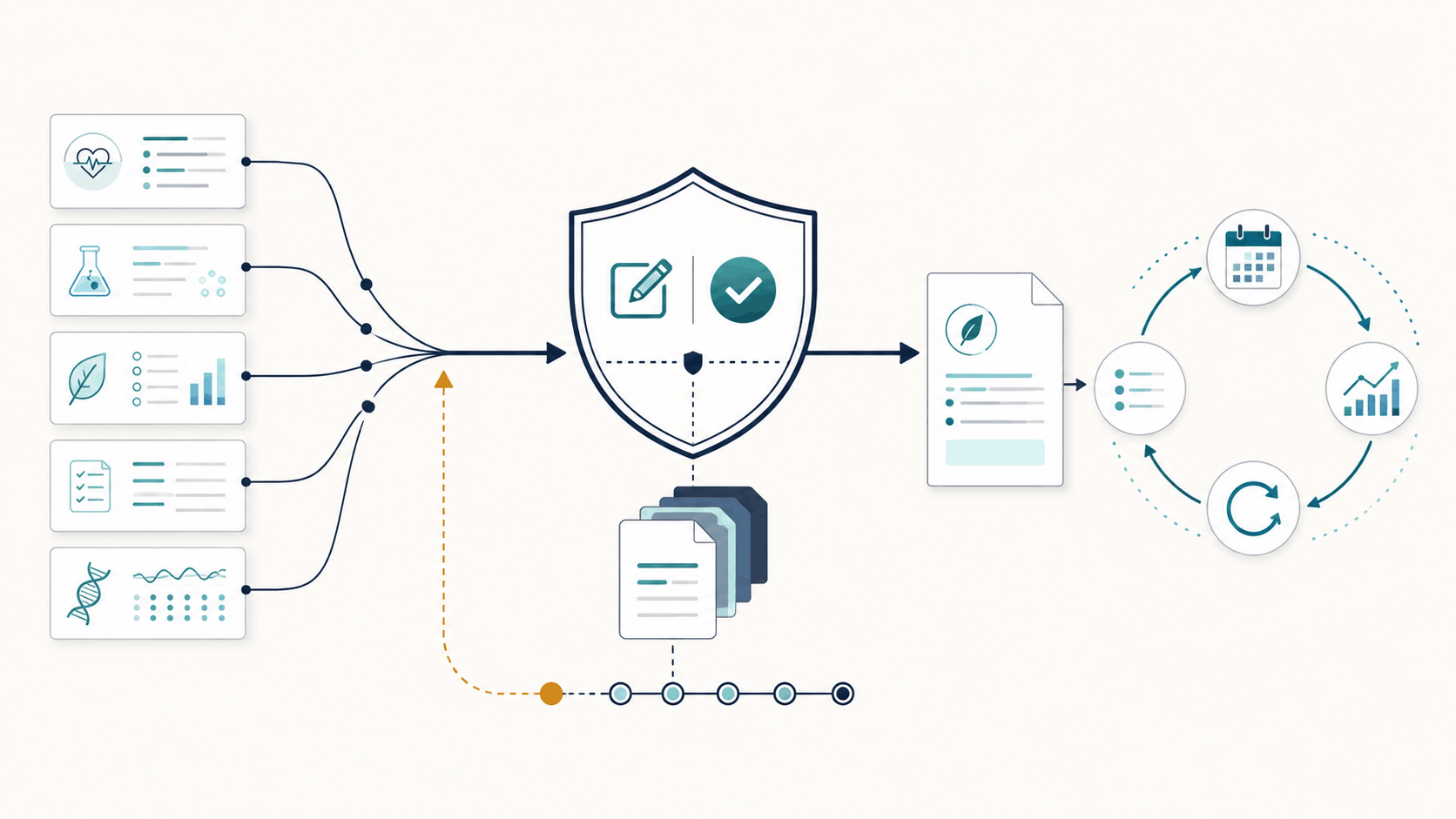
HolistiCare can be configured around the clinic's own methodology and protocol language. Protocol workflows remain editable, so a repeatable process does not require a generic clinical template.
AI-supported suggestions remain reviewable. Practitioners can inspect relevant source data and clinical rules, edit the proposed output and explicitly approve the final plan. Reviews, approvals and protocol changes create a traceable audit trail.
The result is a governed workflow that can be shared across a team while the practitioner remains responsible for each clinical decision. The same principle carries into personalised holistic plans.
Carry approved plans into coordinated follow-up
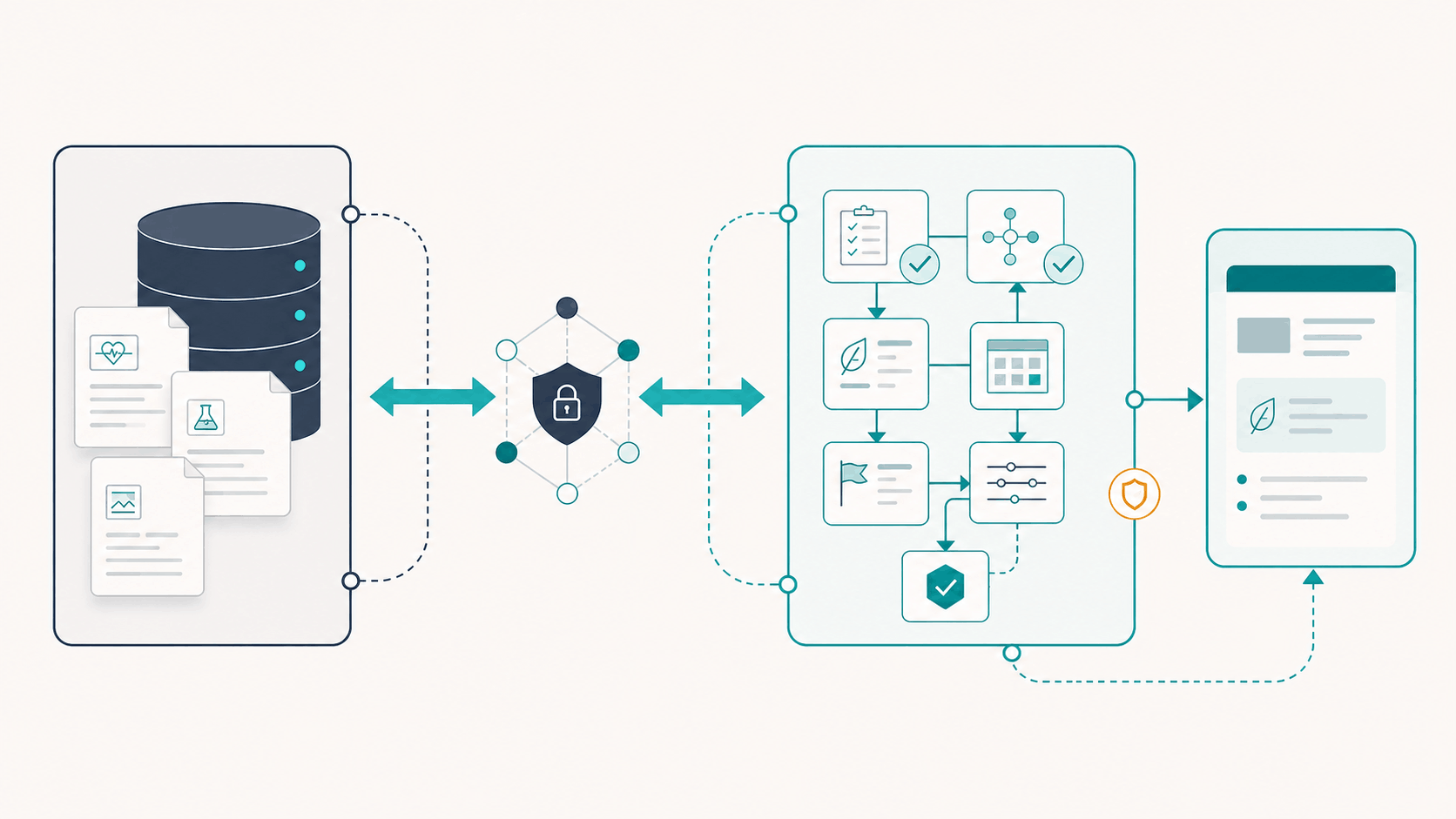
Once a plan is approved, HolistiCare can translate it into structured member tasks across configured domains such as nutrition, supplementation, activity and lifestyle.
The platform also supports structured check-ins, longitudinal biomarker tracking, member-level reporting, cohort-level trend review, secure messaging, role-based access and task routing. This keeps follow-up information connected to the clinical workflow rather than treating the plan as the end of the process.
Member-facing interfaces, applications, reports, communications and program content can be configured under the clinic's brand. Exact white-label scope is agreed during implementation. Explore comprehensive action plans and structured check-ins for more detail on those parts of the workflow.
Keep your EHR. Add the workflow layer around it.
The EHR remains the system of record
Use the EHR for medical history, clinical documentation, orders, and billing or compliance workflows where applicable.
HolistiCare coordinates the longitudinal program around that record
Use HolistiCare to organise supported multi-source data, structure information for review, run clinic-specific protocol workflows, record explicit approval, deliver approved member actions and maintain follow-up visibility.
The objective is a clearer division of labour across the clinical technology stack, not a forced rip-and-replace project. For deeper context, see why EMRs alone are not enough for protocol-driven clinics.
Fit integrations to your actual stack
HolistiCare supports FHIR-based interoperability and can be configured to work with third-party vendors where suitable API access and documentation are available.
During technical discovery, we review the systems your clinic actually uses, the data that needs to move, available APIs, authentication, permissions, mapping, testing and third-party dependencies. We confirm a connection for your clinic only after that route has been reviewed and technically validated.
What to evaluate in functional medicine software
A useful evaluation starts with the way your clinic works today. Compare platforms against these questions:
- Can it bring the data sources you use into a coherent longitudinal view?
- Can clinicians inspect the data and rules behind material suggestions?
- Can it reflect your clinic's methodology and protocol language?
- Is practitioner review and explicit approval required before member delivery?
- Are edits, approvals and protocol versions traceable?
- Can the team review biomarker change and program signals over time?
- Can roles, tasks and access be configured across the care team?
- How will it work alongside your current EHR and vendor stack?
- Can member-facing plans and communications use the clinic's brand?
- Can the vendor provide the privacy, security and implementation documentation your procurement process requires?
Bring one representative data path, one protocol workflow, the roles involved and your follow-up model to the demo. That makes the evaluation specific to your operating model rather than a generic feature tour.
Questions clinic leaders ask
Is HolistiCare a functional medicine EHR or EMR?
No. HolistiCare is a clinical operating layer for multi-source data, clinician-governed protocols, member actions and longitudinal follow-up. Your EHR or EMR remains the system of record.
Will HolistiCare force us into generic protocols?
No. HolistiCare can be configured around your clinic's methodology and clinical language. Protocols remain editable, and the clinic retains clinical ownership and approval.
Does AI send recommendations directly to members?
No. Nothing reaches a member without practitioner review and explicit approval.
What data can HolistiCare support?
HolistiCare supports laboratory results, genetic and microbiome information, structured assessments, clinical history, clinician notes and relevant documents. Wearable and other third-party data depend on suitable access, permissions, configuration and technical validation.
See how HolistiCare fits your current workflow
Bring your current data sources, protocol process, care-team roles and follow-up model. Use the demo to evaluate where HolistiCare fits alongside the systems you already use, what can be configured around your methodology and which connections require technical discovery.