Modern longevity and functional medicine clinics have a paradoxical problem.
They have more data than ever before—genetics, advanced labs, wearables, continuous monitoring—but less time than ever to interpret it. What was supposed to create clarity often creates overwhelm.
This is the Data Paradox: unlimited patient data paired with finite clinician attention.
In this environment, the bottleneck is no longer testing. It’s Patient Data Analysis.
This is where Clinical Decision Support (CDS) powered by AI is changing how high-performing clinics operate—not by replacing clinicians, but by acting as a high-speed analytical copilot that organizes complexity so doctors can focus on care.
The Evolution of Longevity Data: From Panels to Ecosystems
Bloodwork used to be the center of clinical insight.
Today, it’s only one piece of a much larger puzzle.
Modern longevity programs routinely include:
- Comprehensive lab panels (hormones, metabolites, inflammation, micronutrients)
- Genetic data and polygenic risk scores
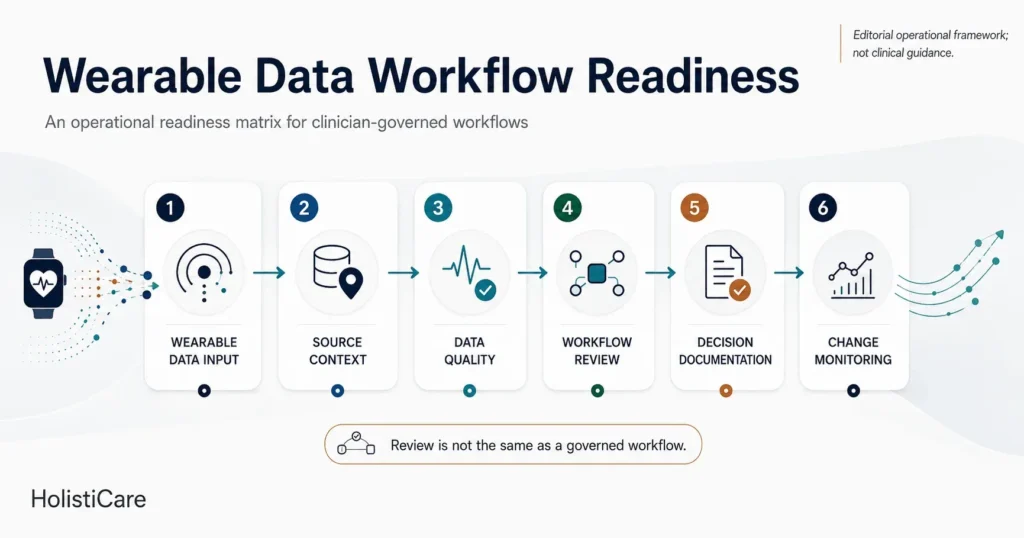
- Wearable signals (sleep, HRV, activity, recovery)
- Lifestyle inputs (nutrition, stress, adherence)
- Longitudinal progress tracking across months or years
Individually, each dataset has value.
Together, they create hundreds of biomarkers per patient, often across different formats, vendors, and timelines.
More data does not automatically mean better decisions
Clinicians are trained to interpret data—but not at the scale and velocity modern platforms generate.
When insight depends on manually:
- Cross-referencing PDFs
- Comparing lab results across time
- Mentally correlating wearables with symptoms
- Re-entering data into notes or spreadsheets
…the system breaks down.
Not clinically—but operationally.
Analysis Paralysis: The Hidden Cost of Too Much Information
The biggest risk of data overload isn’t wrong decisions.
It’s delayed decisions.
What analysis paralysis looks like in clinics
- Charts reviewed after hours instead of during visits
- Labs discussed in isolation rather than in context
- Wearable data underutilized because it’s time-consuming to interpret
- Clinicians defaulting to “good enough” summaries instead of full synthesis
Over time, this leads to:
- Cognitive fatigue
- Shorter consults
- Less personalized recommendations
- Higher administrative burden
- Burnout among clinicians and staff
This is not a failure of expertise.
It’s a failure of infrastructure.
Why Human-Only Analysis Doesn’t Scale
Even the most experienced clinician has limits.
A single patient with:
- 120+ lab markers
- 24/7 wearable streams
- Multi-year historical data
…can easily generate thousands of data points.
No matter how skilled the provider, manually synthesizing this volume for every patient is not scalable.
The real opportunity is not automation—it’s synthesis
AI is often misunderstood as a replacement for judgment.
In healthcare software done responsibly, it serves a different role:
- Pattern recognition at scale
- Timeline construction
- Signal prioritization
This is the core value of Functional Medicine AI when applied correctly: not making decisions, but organizing information so clinicians can make better ones.
AI as Clinical Decision Support, Not Clinical Authority
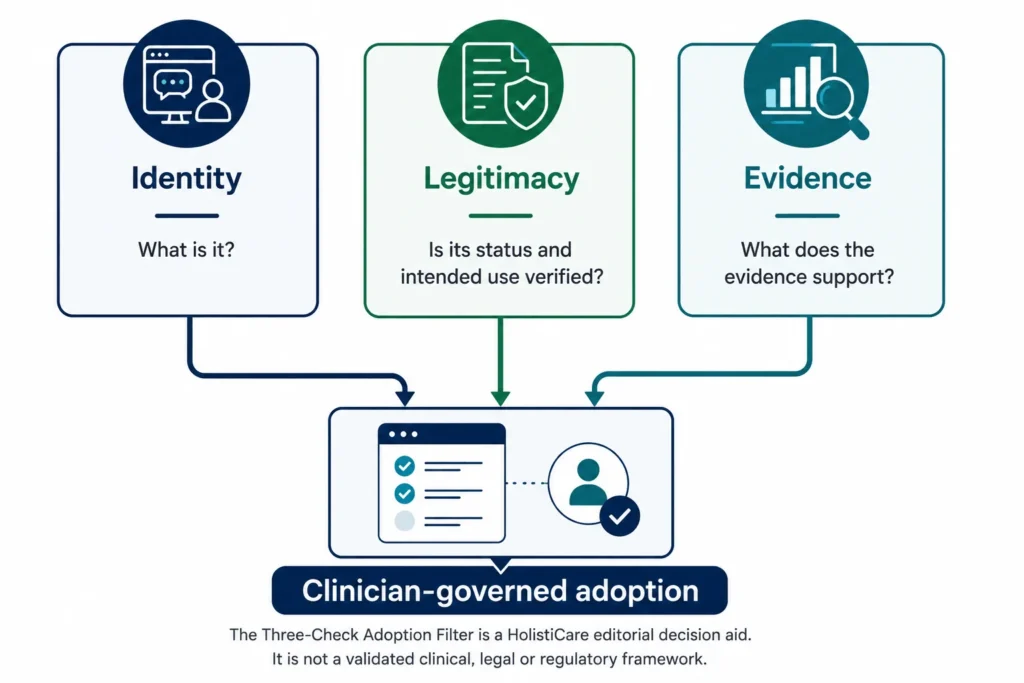
At HolistiCare, AI is positioned deliberately as Clinical Decision Support (CDS).
That distinction matters.
What AI does in a CDS role
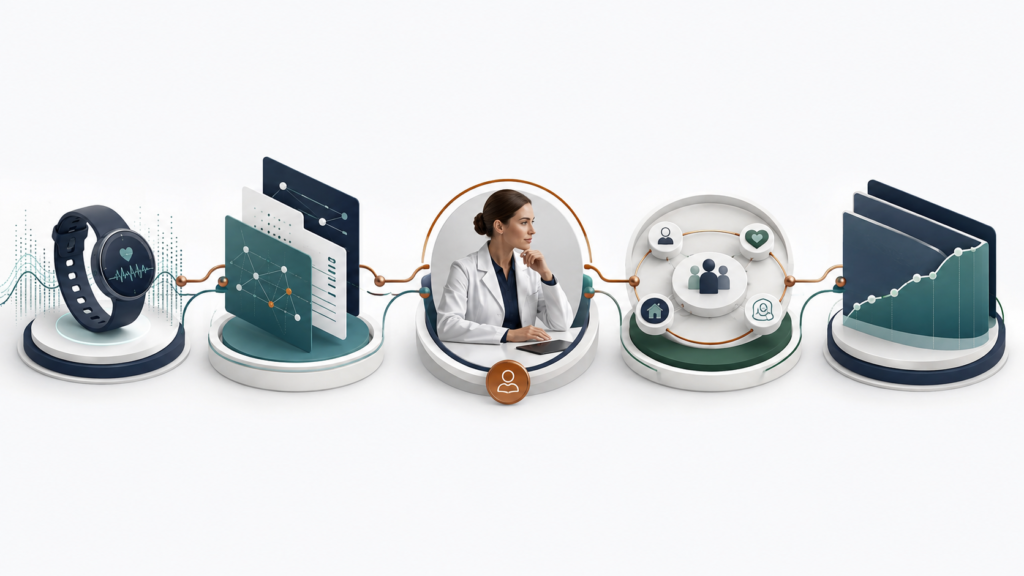
- Aggregates data from labs, genetics, and wearables
- Aligns biomarkers on a unified timeline
- Highlights trends, correlations, and deviations
- Flags patterns that may warrant clinical review
- Reduces manual data reconciliation
What AI does not do
- It does not diagnose conditions
- It does not prescribe treatments
- It does not replace clinical judgment
The clinician remains the decision-maker.
The AI acts as a high-speed analyst, surfacing insights that might otherwise be missed due to time constraints.
From Static Snapshots to Living Timelines
Traditional lab reviews are static.
They answer the question: What does this look like today?
But longevity care is inherently longitudinal.
The power of timeline-based insight
When biomarkers are viewed over time:
- Trends matter more than single values
- Directionality becomes visible
- Interventions can be evaluated for impact
- Patient adherence can be contextualized
AI-driven platforms excel at constructing these timelines automatically.
Instead of flipping between reports, clinicians see:
- How biomarkers move together
- How lifestyle signals align with lab changes
- How interventions correlate with trends
This transforms raw data into narrative context.
Why 800+ Biomarkers Require Machine Assistance
The number isn’t theoretical.
Between:
- Advanced lab panels
- Genetic variants
- Wearable-derived metrics
- Derived scores and ratios
It’s common for comprehensive programs to track hundreds of biomarkers per patient.
The challenge is prioritization
Not every data point deserves equal attention.
AI-based CDS helps by:
- Grouping related markers
- Highlighting deviations from baselines
- Emphasizing changes over noise
- Supporting clinical focus during limited visit time
The result is not more information—but better signal-to-noise ratio.
Wearables: High-Frequency Data, Low Utilization
Wearables generate enormous value—but only if interpreted.
Sleep stages, HRV, resting heart rate, activity load, recovery scores—these metrics update daily or even hourly.
Why wearable data often goes unused
- Too granular for manual review
- Disconnected from lab and clinical data
- Difficult to summarize during visits
AI bridges this gap by:
- Aggregating wearable data into trends
- Aligning it with labs and interventions
- Highlighting changes relevant to clinical conversations
This allows clinicians to reference wearables meaningfully, without becoming data analysts.
Reducing Administrative Burden Without Cutting Corners
Clinician burnout is rarely caused by patient care.
It’s caused by documentation, data entry, and fragmentation.
How CDS platforms improve operational efficiency
- Automated data ingestion from multiple sources
- Unified patient records across data types
- Reduced need for manual copying and pasting
- Faster chart preparation before visits
These efficiencies don’t replace care.
They protect clinician energy so care remains sustainable
Better Data Synthesis Improves the Patient Experience
Patients feel the difference when clinicians aren’t distracted by screens.
When data is pre-synthesized:
- Visits feel more focused
- Explanations are clearer
- Trends are easier to communicate
- Patients perceive deeper personalization
This supports:
- Stronger trust
- Higher engagement
- Improved retention over time
While results vary by clinic, many report that better data organization directly supports patient satisfaction.
Clinical Decision Support as a Competitive Advantage
As longevity and functional medicine grow, patient expectations rise.
High-performing clinics differentiate not just by:
- Which tests they run
- Which supplements they recommend
…but by how well they interpret and communicate complex data.
AI-powered CDS enables:
- More consistent insights across providers
- Higher-quality consults at scale
- Reduced variability caused by time pressure
- A more professional, tech-forward patient experience
This is not about replacing expertise.
It’s about amplifying it.
Security, Privacy, and Responsible Design
Data aggregation requires trust.
HolistiCare is designed to support HIPAA-aligned and GDPR-aware workflows, depending on configuration, contracts, and regional requirements.
Key principles include:
- Encrypted data storage and transmission
- Role-based access controls
- Audit logs and permissions
- Secure integrations with labs and wearable providers
Compliance is a shared responsibility, and clinics maintain control over their policies and workflows.
The Future: Less Time on Data, More Time on Care
The trajectory is clear.
Clinics will continue to collect more data.
Patients will expect more personalization.
Regulatory and documentation demands will not decrease.
The only sustainable path forward is better synthesis, not more effort.
Clinical Decision Support allows AI to do what it does best:
- Process large volumes of information
- Detect patterns across time and systems
- Present insights clearly and efficiently
So clinicians can do what they do best:
- Think critically
- Build relationships
- Make informed decisions
- Deliver care with intention
Final Thoughts: Beyond Bloodwork Is About Perspective
“Beyond bloodwork” doesn’t mean abandoning labs.
It means placing them in context.
When genetics, labs, and wearables are unified into a coherent timeline, the story of the patient becomes clearer.
AI doesn’t write that story.
It simply organizes the pages—so the clinician can read it, interpret it, and act.
See How Clinical Decision Support Can Reduce Data Overload in Your Clinic
HolistiCare helps longevity clinics and functional medicine practices synthesize labs, wearables, and patient data into a unified, clinician-first platform—designed to support insight without burnout.
For the complete workflow, explore the functional medicine clinical operating platform.
Request a Demo to see how AI-powered Clinical Decision Support can streamline Patient Data Analysis and give your team time back for what matters most.
Disclaimer
The information in this article is provided by HolistiCare for general informational purposes only and is not intended to be a substitute for professional medical advice, diagnosis, or treatment. HolistiCare does not warrant or guarantee the accuracy, completeness, or usefulness of any information contained in this article. Reliance on any information provided here is solely at your own risk.
This content does not create a doctor-patient relationship. Clinical decisions should be made by qualified healthcare professionals using clinical judgment and all available patient information. If you have a medical concern, contact your healthcare provider promptly.
HolistiCare may reference biomarker roles, study examples, products, or tools. Mention of specific tests, biomarkers, therapies, or vendors is for illustrative purposes only and does not imply endorsement. HolistiCare is not responsible for the content of third party sites linked from this article, and inclusion of links does not represent an endorsement of those sites.
Use of HolistiCare software, services, or outputs should be in accordance with applicable laws, regulations, and clinical standards. Where required by law or regulation, clinical use of biomarker information should rely on validated laboratory results and regulatory approvals. HolistiCare disclaims all liability for any loss or damage that may arise from reliance on the information contained in this article.
If you are a patient, please consult your healthcare provider for advice tailored to your clinical situation. If you are a clinician considering HolistiCare for clinical use, contact our team for product specifications, regulatory status, and clinical validation documentation.
All claims and statistics are based on cited studies and industry reports as of 2026. Individual results may vary; consult healthcare professionals for personalized advice. HolistiCare features are designed to support evidence-based holistic care.